Don't miss our holiday offer - 20% OFF!


Read Also: The Benefits of IoT in Business: Efficiency, Automation, and Security
In the modern industrial era, data has become a highly valuable asset. Companies that can effectively manage and utilize data will gain a significant competitive advantage. One of the technologies that plays a major role in data collection is the Internet of Things (IoT), which allows devices to connect and transmit data automatically.
However, the large volume of data generated by IoT devices often becomes a challenge. Without the right system, this data is difficult to process and utilize optimally. This is where platforms like Flux play a crucial role.
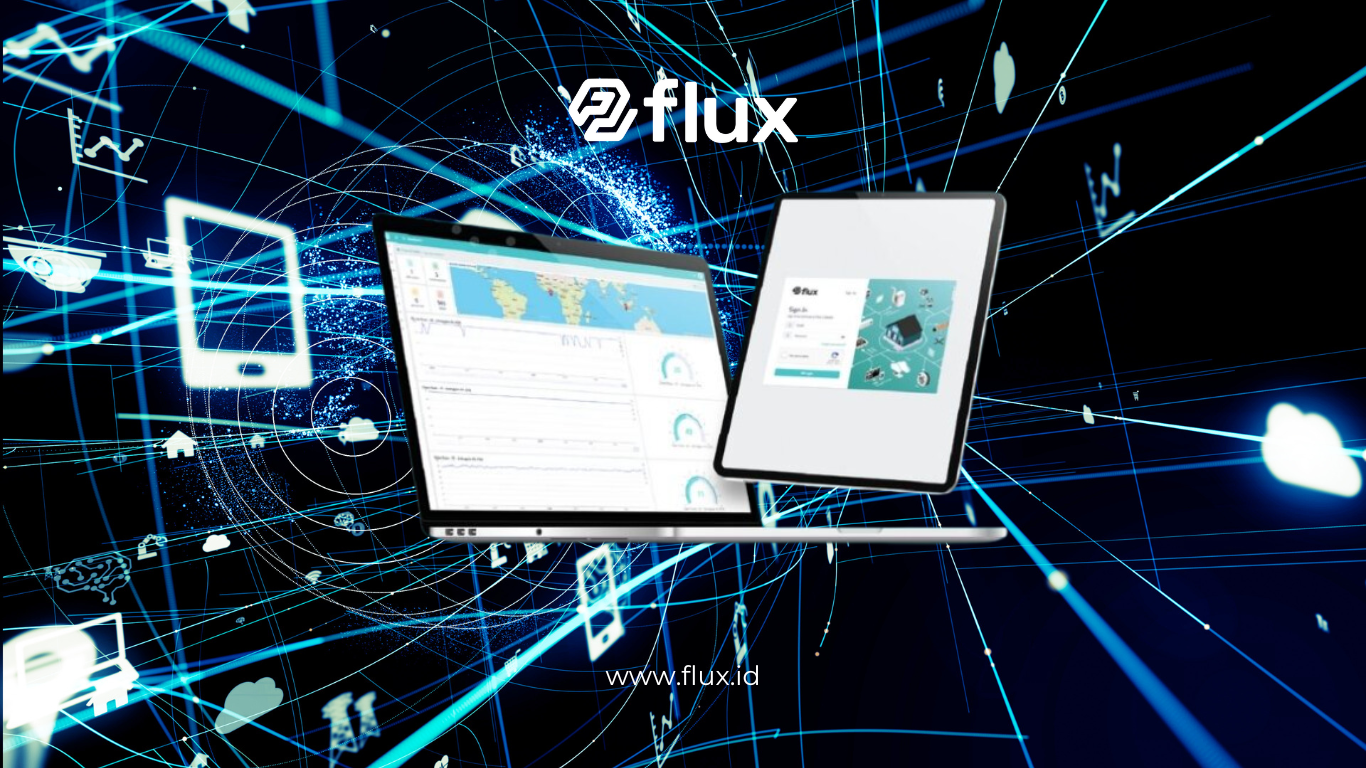
Flux is an IoT platform designed to help companies monitor data in real-time, manage devices, and support digital transformation in operations. By using Flux, companies can gain better visibility into their operational processes and make data-driven decisions.
This article will comprehensively discuss how to use Flux for Flux IoT monitoring and effectively support digital operational transformation.
Contents
Understanding Flux and Its Role in IoT Monitoring

Read Also: The Benefits of IoT in Business: Efficiency, Automation, and Security
Flux is an IoT-based platform that enables integration between physical devices and digital systems within a centralized ecosystem. It is designed to simplify the collection, processing, and visualization of data from various sources.
In the context of IoT monitoring, Flux acts as a control center that connects sensors, devices, and backend systems. Data sent by IoT devices is collected and displayed in easy-to-understand dashboards.
The main advantage of Flux lies in its ability to provide real-time data. This allows users to monitor operational conditions directly without waiting for manual reports.
Additionally, Flux supports various types of devices and communication protocols, making it suitable for multiple industries such as manufacturing, energy, environment, and logistics.
With these capabilities, Flux becomes an essential tool in supporting efficient and integrated IoT monitoring.
Steps to Use Flux for IoT Data Monitoring

Read Also: Tutorial: Building Temperature and Humidity Monitoring with IoT
To start using Flux for IoT data monitoring, several steps need to be followed. This process includes device setup and dashboard configuration.
The first step is connecting IoT devices to the Flux platform. Devices such as temperature sensors, pressure sensors, or air quality sensors must be configured to send data to the system.
Next, perform data connection configuration. Ensure devices are connected via a stable network such as Wi-Fi, Ethernet, or cellular networks. A stable connection is essential for real-time data transmission.
The next step is setting monitoring parameters. Users can define which data to monitor and set thresholds for each parameter.
After that, create a data visualization dashboard. Flux provides dashboard features that allow users to display data in graphs, tables, or other indicators.
Finally, enable automatic notifications. With this feature, the system will send alerts if abnormal conditions occur, allowing immediate action.
By following these steps, companies can effectively utilize Flux for IoT data monitoring.
Flux Features Supporting Real-Time Monitoring

Read Also: The Benefits of IoT Data from Flux for Operational Efficiency
Flux is equipped with various features designed to support real-time IoT data monitoring. These features help users better understand operational conditions.
One of the main features is the real-time dashboard, which displays data instantly so users can observe changes in conditions as they happen.
The data logging feature allows storage of historical data that can be used for trend analysis. With this data, companies can identify patterns and make better decisions.
Additionally, there are alert and notification features that provide warnings when anomalies occur. For example, if temperature exceeds a defined threshold, the system will send a notification.
Flux also supports integration with other systems, such as ERP or asset management systems, allowing data to be used more broadly in operations.
The multi-user access feature ensures that different stakeholders can access data according to their roles, improving collaboration.
The Role of Flux in Digital Operational Transformation

Read Also: IoT for Environmental Monitoring: Water, Air, and Soil
The use of Flux is not limited to data monitoring but also plays an important role in digital operational transformation. By integrating various systems and data, Flux helps companies create more efficient workflows.
One major impact is improved operational visibility. Management can monitor all activities in real-time, making decision-making easier.
Additionally, Flux supports process automation. For example, systems can automatically activate or deactivate devices based on certain conditions.
Flux also enhances work efficiency. With real-time data availability, employees can work faster and more accurately.
In the long term, using Flux helps companies build data-driven operational systems, which is essential for staying competitive in the digital era.
Implementation Challenges and Optimization Tips
Read Also: Common IoT System Issues and How Flux Solves Them
Although it offers many benefits, implementing Flux also comes with challenges. One of the main challenges is integration with existing systems.
Companies must ensure that their devices and systems are compatible with the Flux platform. Additionally, implementation requires careful planning.
Another challenge is the need for employee training. Users must understand how to use Flux to fully utilize its features.
To optimize the use of Flux, consider the following tips:
- Start with a small pilot project
- Define clear monitoring objectives
- Use simple and informative dashboards
- Conduct regular evaluations
- Ensure data security is maintained
With the right approach, companies can overcome challenges and maximize the benefits of using Flux.
Conclusion
Flux is an effective solution for IoT data monitoring and supporting digital operational transformation. With its ability to collect, process, and display data in real-time, it helps companies improve efficiency and productivity.
Through proper implementation and optimal use of its features, companies can leverage Flux to create more modern and integrated operational systems.
Although there are challenges in implementation, the long-term benefits are substantial. With the continuous advancement of IoT technology, the use of platforms like Flux will become an essential part of industrial digital transformation.