Don't miss our holiday offer - 20% OFF!

Read Also : Improving Operational Efficiency with the Flux Dashboard
In today’s rapidly evolving digital era, system integration has become a key factor in improving industrial operational efficiency. Many companies now rely on the Internet of Things (IoT) to collect data from various devices, ranging from sensors to production machines. However, the biggest challenge lies not only in data collection but in connecting all these devices into a single integrated system.
Without proper integration, the generated data becomes fragmented and difficult to utilize optimally. This can hinder decision-making and reduce operational efficiency. Therefore, a platform capable of connecting devices and data in real time is essential.
Flux emerges as an integrated IoT solution that enables companies to connect various devices, manage data centrally, and perform real-time monitoring. With these capabilities, Flux helps organizations build more efficient, data-driven operational systems.
This article discusses how Flux integrated IoT works in connecting devices and data in real time to support modern industrial operations.
Contents
Challenges of IoT Integration in Modern Industry
Read Also : 5 Key Benefits of IoT in Digital Business Transformation
Although IoT offers numerous benefits, its implementation does not always run smoothly. One of the main challenges is integrating different devices and systems.
In industrial environments, devices often come from various vendors with different communication protocols, making integration more complex.
Additionally, IoT-generated data is typically large and diverse. Without the right system, it becomes difficult to collect and analyze this data effectively.
Limited monitoring capabilities also pose a challenge. Many companies still use systems that cannot provide real-time data, resulting in slower response times to issues.
Given these challenges, a solution is needed to unify all components into a single integrated system.
How Flux Connects IoT Devices
Read Also : Benefits of Using Fluxcloud for Large-Scale IoT Data Management
Flux operates as a platform that connects various IoT devices into a centralized system. The process begins with data collection by sensors and field devices.
The collected data is then transmitted through communication networks such as Wi-Fi, Ethernet, or cellular networks. Afterward, the data is received by the Flux platform for processing and storage.
Flux supports multiple communication protocols, making it compatible with a wide range of devices. This simplifies integration without requiring companies to replace existing hardware.
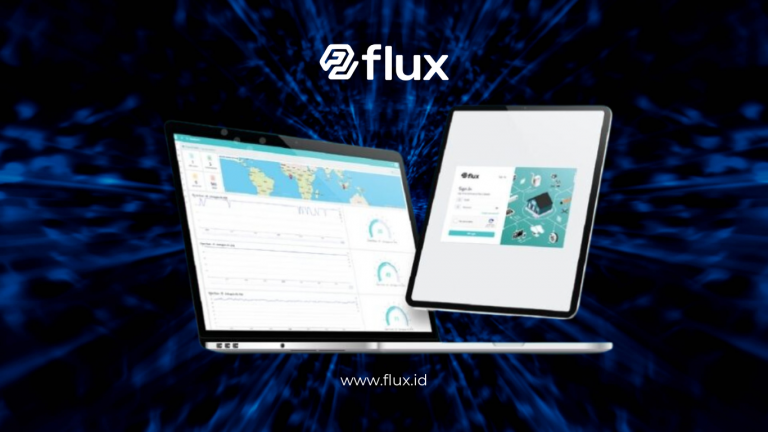
Once processed, the data is presented in an easy-to-understand dashboard, allowing users to monitor operational conditions in real time.
Through this approach, Flux efficiently connects devices and data within a fully integrated ecosystem.
Data Integration for Real-Time Monitoring

Read Also : The Benefits of IoT for Manufacturing and Factory Automation
One of Flux’s key advantages is its ability to integrate data from multiple sources for real-time monitoring. Previously scattered data can now be consolidated into a single platform.
Real-time monitoring enables companies to observe operational conditions instantly, which is crucial in industries requiring rapid responses to changes.
With integrated data, companies gain a more comprehensive operational overview. Information from various devices can be analyzed simultaneously to generate more accurate insights.
Additionally, real-time monitoring helps detect issues early. If anomalies occur, the system can send alerts, enabling immediate action.
Data-Driven Automation for Operational Efficiency
Read Also : Flux Connect: Easily Connecting IoT Devices
Flux not only connects devices and data but also supports the automation of operational processes. With real-time data availability, the system can execute specific actions automatically.
For example, the system can adjust machine parameters based on certain conditions or trigger alarms when abnormalities occur. This automation reduces manual intervention.
With more automated processes, companies can improve efficiency and minimize human error. Automation also helps maintain operational consistency.
In the long term, data-driven automation can result in significant cost savings and increased productivity.
The Impact of Integrated IoT on Digital Transformation
Read Also : Remote Monitoring of IoT Devices with Flux
IoT integration with Flux has a significant impact on digital transformation. With an integrated system, companies can manage operations more efficiently and transparently.
Centralized data simplifies analysis and decision-making. Management can leverage this data to plan more effective strategies.
Additionally, IoT integration enhances collaboration across teams. The same data can be accessed by multiple stakeholders, improving communication.
With technologies like Flux, companies can build modern operational systems that are ready to face the challenges of the digital era.
Conclusion
Flux is an integrated IoT solution capable of connecting devices and data in real time. With its integration, monitoring, and automation capabilities, the platform helps companies improve operational efficiency.
Through a centralized system, data can be better managed and used for more accurate decision-making. Additionally, data-driven automation reduces manual workload and increases productivity.
Although IoT implementation comes with challenges, platforms like Flux offer effective solutions. With proper utilization, companies can accelerate digital transformation and achieve a competitive advantage in the market.